Esta web utiliza cookies propias y de terceros que nos permiten optimizar tu experiencia en el sitio web, evaluar su rendimiento, generar estadísticas de uso y mejorar y añadir nuevas funcionalidades. Mediante el análisis de tus hábitos de navegación podemos mostrar contenidos más relevantes y medir las interacciones con la web.
Puede obtener más información aquí.
Una cookie es un fichero que se descarga en tu ordenador al acceder a determinadas páginas web.Las cookies permiten a una página web, entre otras cosas, almacenar y recuperar información sobre los hábitos de navegación de un usuario o de su equipo, gestionar el acceso de usuarios a zonas restringidas de la web, etc.Tipo de cookies utiliza esta página web:
Este tipo de cookies permiten al usuario la navegación a través de una página web, plataforma o aplicación y la utilización de las diferentes opciones o servicios que en ella existan como, por ejemplo, controlar el tráfico y la comunicación de datos, identificar la sesión, acceder a partes de acceso restringido, seleccionar el idioma, o compartir contenidos a través de redes sociales.
| Nombre | Descripcion | Duración | Habilitado |
|---|---|---|---|
| ID de tu sesión. Te identifica en este navegador y nos permite gestionar tus cookies o almacenar tu cesta de la compra. | 8760 horas | ||
| Indica qué cookies has aceptado. | 8760 horas | ||
| Una cookie PHPSESSID es una cookie de sesión que se utiliza para identificar la sesión de un usuario en un sitio web. | 8760 horas |
Son aquéllas que posibilitan el seguimiento y análisis del comportamiento de los usuarios en nuestra página. La información recogida se utiliza para la medición de la actividad de los usuarios en la web y la elaboración de perfiles de navegación de los usuarios, con la finalidad de mejorar la web, así como los productos y servicios ofertados.
| Nombre | Descripcion | Duración | Habilitado |
|---|---|---|---|
| Es un servicio de analítica web que utiliza cookies de análisis. | 8760 horas |
Estas cookies pueden ser establecidas a través de nuestro sitio por nuestros socios publicitarios. Pueden ser utilizadas por esas empresas para crear un perfil de sus intereses y mostrarle anuncios relevantes en otros sitios. No almacenan directamente información personal, sino que se basan en la identificación única de su navegador y dispositivo de Internet. Si no permite utilizar estas cookies, verá menos publicidad dirigida.
| Nombre | Descripcion | Duración | Habilitado |
|---|
O que são os cookies?
Um cookie é um arquivo descarregado no seu computador para aceder certos sites. Os cookies permitem que um site, entre outras coisas, possa armazenar e recuperar informações sobre os hábitos de navegação de um/a usuário/a ou do seu computador, gerenciar o acesso do/a usuário/a às áreas restritas do site etc.
Que tipo de cookies utiliza este site?
Cookies de análise
São aqueles que permitem a monitorização e análise do comportamento do/a usuário/a no nosso site. A informação recolhida é usada para medir a atividade dos/as usuários/as no site e para criar perfis de navegação do/a usuário/a, a fim de melhorar o site e os produtos e serviços oferecidos.
Cookies técnicos
Permitem ao/à usuário/a navegar através dum site, plataforma ou aplicação e o uso de diferentes opções ou serviços que existem, como por exemplo o controlo do tráfego e comunicação de dados, identificar a sessão, aceder a áreas de acesso restrito, ou compartilhar conteúdos através de redes sociais.
Cookies de personalização
São aqueles que permitem adaptar a navegação no site com as suas preferências, como o idioma, navegador utilizado etc.
| Nome | Própria / Terceiros | Duração | Descrição | Proprietário |
| gat | Terceiros | 1 minuto | É usado para limitar a porcentagem de solicitações. | Google Analytics |
| _ga | Terceiros | 2 anos | É usado para distinguir os usuários. | Google Analytics |
| _gid | Terceiros | 24 horas | É usado para distinguir os usuários. | Google Analytics |
| PHPSESSID | Própria | Sesion | Cookie de sessão, desaparece quando a web é fechada. | Arnoia |
| COOKIE_CONSENT | Própria | 1 mês | Cookie de personalização. | Arnoia |
| SESS_ID | Própria | 10 dias | Cookie de sessão. | Arnoia |
Quem usa os cookies?
Os cookies utilizados neste site são usados pelo responsável legal do mesmo e pelos seguintes serviços ou fornecedores de serviços:
- Google Analytics: é um serviço de análise da web que usa cookies de análise. Voçê pode verificar a política de privacidade deste serviço no site https://www.google.com/intl/pt-PT/policies/
Como posso desativar ou excluir os cookies?
Voçê pode permitir, bloquear ou apagar os cookies instalados no seu computador configurando as opções do navegador instalado. As seguintes ligações fornecem informações adicionais sobre as opções de configuração dos cookies nos distintos navegadores:
– Internet Explorer: https://support.microsoft.com/pt-pt/help/278835/how-to-delete-cookie-files-in-internet-explorer
– Google Chrome: https://support.google.com/chrome/answer/95647?hl=pt
– Firefox: https://support.mozilla.org/t5/Cookies-and-cache/Ativar-e-desativar-cookies-que-os-websites-utilizam-para/ta-p/14289
– Safari: https://support.apple.com/kb/PH21411?locale=pt_PT
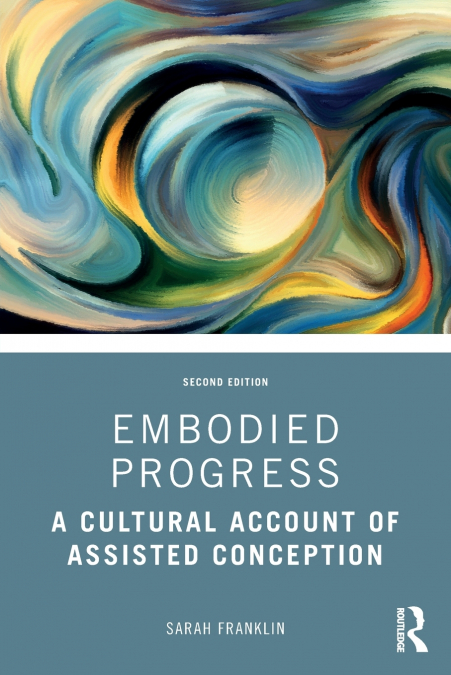
This new editionáof Sarah FranklinâÇÖs classic monograph on the development of in vitro fertilisation (IVF) includes two entirely new chapters reflecting on the relevance of the bookâÇÖs findings in the context of the past two decades and providing a âÇÖstate-of-the-artâÇÖ review of the field today.Over the past 25 years, both the assisted conception industry and the academic field of reproductive studies have grown enormously. IVF, in particular, is belatedly becoming recognised as one of the most influential technologies of the twentieth and twenty-first centuries, with a far-reaching set of implications that have to date been underestimated, understudied and under-reported. This pioneering text was the first to explore the emergence of commercial IVF in the United Kingdom, where the technique was originally developed. During the 1980s, the British Parliament devised a unique system of comprehensive national regulation of assisted reproduction amidst fractious public and media debate over IVF and embryo research. Franklin chronicles these developments and explores their significance in relation to classic anthropological debates about the meanings of kinship, gender and the âÇÖbiological factsâÇÖ of parenthood. Drawing on extensive personal interviews with women and couples undergoing IVF, as well as ethnographic fieldword in early IVF clinics, the book explores the unique demands of the IVF technique. In richly detailed chapters, it documents the âÇÖtopsy-turvyâÇÖ world of IVF, and how the experience of undergoing IVF changes its users in ways they had not anticipated. Franklin argues that such experiences reveal a crucial feature of translational biomedical procedures more widely - namely, that these are âÇÖhope technologiesâÇÖ that paradoxically generate new uncertainties and risks in the very space of their supposed resolution. The final chapter closely engages with the âÇÖhope technologyâÇÖ concept, as well as the idea of âÇÖhaving to tryâÇÖ and uses these frames to link contemporary reproductive studies to core sociological and anthropological arguments about economy, society and technology.In the context of rapid fertility decline and huge growth in the fertility industry, this volume is even more relevant today than when it was first published at the dawn of what Franklin calls the era of âÇÖiFertilityâÇÖ. Embodied Progress is an essential read for all social science academics and students with an interested in the burgeoning new field of reproductive studies. It is also a valuable resource for practitioners working in the fields of reproductive health, biomedicine and policy.