Esta web utiliza cookies propias y de terceros que nos permiten optimizar tu experiencia en el sitio web, evaluar su rendimiento, generar estadísticas de uso y mejorar y añadir nuevas funcionalidades. Mediante el análisis de tus hábitos de navegación podemos mostrar contenidos más relevantes y medir las interacciones con la web.
Puede obtener más información aquí.
Una cookie es un fichero que se descarga en tu ordenador al acceder a determinadas páginas web.Las cookies permiten a una página web, entre otras cosas, almacenar y recuperar información sobre los hábitos de navegación de un usuario o de su equipo, gestionar el acceso de usuarios a zonas restringidas de la web, etc.Tipo de cookies utiliza esta página web:
Este tipo de cookies permiten al usuario la navegación a través de una página web, plataforma o aplicación y la utilización de las diferentes opciones o servicios que en ella existan como, por ejemplo, controlar el tráfico y la comunicación de datos, identificar la sesión, acceder a partes de acceso restringido, seleccionar el idioma, o compartir contenidos a través de redes sociales.
| Nombre | Descripcion | Duración | Habilitado |
|---|---|---|---|
| ID de tu sesión. Te identifica en este navegador y nos permite gestionar tus cookies o almacenar tu cesta de la compra. | 8760 horas | ||
| Indica qué cookies has aceptado. | 8760 horas | ||
| Una cookie PHPSESSID es una cookie de sesión que se utiliza para identificar la sesión de un usuario en un sitio web. | 8760 horas |
Son aquéllas que posibilitan el seguimiento y análisis del comportamiento de los usuarios en nuestra página. La información recogida se utiliza para la medición de la actividad de los usuarios en la web y la elaboración de perfiles de navegación de los usuarios, con la finalidad de mejorar la web, así como los productos y servicios ofertados.
| Nombre | Descripcion | Duración | Habilitado |
|---|---|---|---|
| Es un servicio de analítica web que utiliza cookies de análisis. | 8760 horas |
Estas cookies pueden ser establecidas a través de nuestro sitio por nuestros socios publicitarios. Pueden ser utilizadas por esas empresas para crear un perfil de sus intereses y mostrarle anuncios relevantes en otros sitios. No almacenan directamente información personal, sino que se basan en la identificación única de su navegador y dispositivo de Internet. Si no permite utilizar estas cookies, verá menos publicidad dirigida.
| Nombre | Descripcion | Duración | Habilitado |
|---|
O que são os cookies?
Um cookie é um arquivo descarregado no seu computador para aceder certos sites. Os cookies permitem que um site, entre outras coisas, possa armazenar e recuperar informações sobre os hábitos de navegação de um/a usuário/a ou do seu computador, gerenciar o acesso do/a usuário/a às áreas restritas do site etc.
Que tipo de cookies utiliza este site?
Cookies de análise
São aqueles que permitem a monitorização e análise do comportamento do/a usuário/a no nosso site. A informação recolhida é usada para medir a atividade dos/as usuários/as no site e para criar perfis de navegação do/a usuário/a, a fim de melhorar o site e os produtos e serviços oferecidos.
Cookies técnicos
Permitem ao/à usuário/a navegar através dum site, plataforma ou aplicação e o uso de diferentes opções ou serviços que existem, como por exemplo o controlo do tráfego e comunicação de dados, identificar a sessão, aceder a áreas de acesso restrito, ou compartilhar conteúdos através de redes sociais.
Cookies de personalização
São aqueles que permitem adaptar a navegação no site com as suas preferências, como o idioma, navegador utilizado etc.
| Nome | Própria / Terceiros | Duração | Descrição | Proprietário |
| gat | Terceiros | 1 minuto | É usado para limitar a porcentagem de solicitações. | Google Analytics |
| _ga | Terceiros | 2 anos | É usado para distinguir os usuários. | Google Analytics |
| _gid | Terceiros | 24 horas | É usado para distinguir os usuários. | Google Analytics |
| PHPSESSID | Própria | Sesion | Cookie de sessão, desaparece quando a web é fechada. | Arnoia |
| COOKIE_CONSENT | Própria | 1 mês | Cookie de personalização. | Arnoia |
| SESS_ID | Própria | 10 dias | Cookie de sessão. | Arnoia |
Quem usa os cookies?
Os cookies utilizados neste site são usados pelo responsável legal do mesmo e pelos seguintes serviços ou fornecedores de serviços:
- Google Analytics: é um serviço de análise da web que usa cookies de análise. Voçê pode verificar a política de privacidade deste serviço no site https://www.google.com/intl/pt-PT/policies/
Como posso desativar ou excluir os cookies?
Voçê pode permitir, bloquear ou apagar os cookies instalados no seu computador configurando as opções do navegador instalado. As seguintes ligações fornecem informações adicionais sobre as opções de configuração dos cookies nos distintos navegadores:
– Internet Explorer: https://support.microsoft.com/pt-pt/help/278835/how-to-delete-cookie-files-in-internet-explorer
– Google Chrome: https://support.google.com/chrome/answer/95647?hl=pt
– Firefox: https://support.mozilla.org/t5/Cookies-and-cache/Ativar-e-desativar-cookies-que-os-websites-utilizam-para/ta-p/14289
– Safari: https://support.apple.com/kb/PH21411?locale=pt_PT

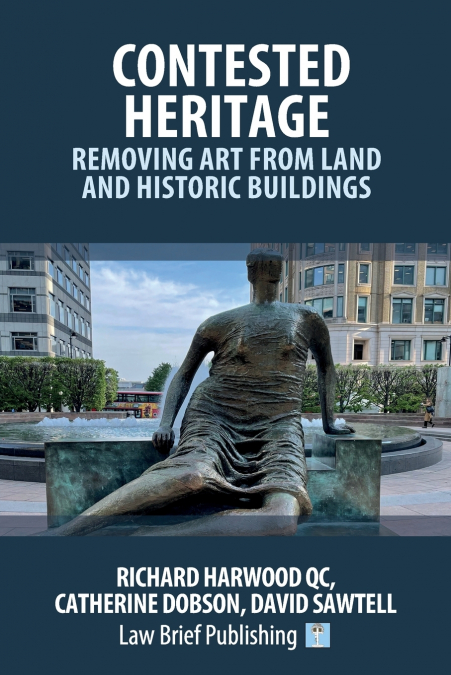
Statues, sculpture and paintings may be part of buildings or land. If so, property ownership is made more complex. Removing such works might require a planning or heritage consent. These issues are important for the art market and of wider public interest in the debate over contested heritage.It includes:Property law on ownership, conversion of goods and saleThe working of listed building consent, planning permission, scheduled monument consent and conservation area,The meaning of âÇÖbuildingâÇÖ, âÇÖfixedâÇÖ and âÇÖcurtilageâÇÖFull analysis of the Supreme CourtâÇÖs decision ináDill v Secretary of Stateá[2020] UKSC 20The recent changes in law and policy on contested heritageChanging street names and moving church treasuresFull coverage of the law and policy in England, Wales and Northern IrelandThis book will be of interest to art lawyers, planning, property and private client lawyers dealing with heritage, planning and heritage consultants, conservation students and art law students.ABOUT THE AUTHORSRichard Harwood OBE QC specialises in planning, environmental, public and art law at 39 Essex Chambers. In particular he acts for art owners, regulators and third parties on the removal of works of art, listing, export control and contested heritage. His recent major heritage cases have includedáDilláin the Supreme Court and the Stonehenge road tunnel.David Sawtell is at 39 Essex Chambers. He was called to the Bar by LincolnâÇÖs Inn in 2005. His practice combines property law, construction law and commercial work, both domestically and internationally. He undertook his BA and his MPhil at the University of Cambridge, and completed the MSc in Construction Law at KingâÇÖs College, London. David is a Fellow of the Chartered Institute of Arbitrators. He is currently researching towards his PhD at the University of Cambridge.Catherine Dobson has a broad practice which combines general public law, environmental law and public international law. She has developed a niche expertise in historic environment matters, and has acted for owners and interest groups on art and antiquities matters, in particular on issues relating to the removal of art from historic buildings. She acted (led by Richard Harwood QC) for the successful for the former owneráin Dill v Secretary of State for Communities and Local Governmentá[2020] UKSC 20, where the Supreme Court clarified the test for what can constitute a listed building. She has recently advised on the lawfulness of removal of a high value statue from a listed building. She has lectured on these topics at the Institute of Art and Law and is a Fellow of St EdmundâÇÖs College, Cambridge, where she teaches constitution law.áIn 2020 Catherine was named Environmental and Planning Law Junior of the Year in the Chambers UK Bar Awards.CONTENTSIntroductionPART ONE: REGULATORY CONSENTSOverviewChapter One - Listed Building ConsentChapter Two - Planning PermissionChapter Three - Scheduled Monuments and Conservation AreasChapter Four - Grant of Regulatory ConsentChapter Five - Street NamesChapter Six - The Church of EnglandPART TWO: OWNERSHIPOverviewChapter Seven -Annexation to the LandChapter Eight -ConversionChapter Nine -ConveyancePART THREE: A CASE STUDYChapter Ten -The Statue of Edward Colston in Bristol