Esta web utiliza cookies propias y de terceros que nos permiten optimizar tu experiencia en el sitio web, evaluar su rendimiento, generar estadísticas de uso y mejorar y añadir nuevas funcionalidades. Mediante el análisis de tus hábitos de navegación podemos mostrar contenidos más relevantes y medir las interacciones con la web.
Puede obtener más información aquí.
Una cookie es un fichero que se descarga en tu ordenador al acceder a determinadas páginas web.Las cookies permiten a una página web, entre otras cosas, almacenar y recuperar información sobre los hábitos de navegación de un usuario o de su equipo, gestionar el acceso de usuarios a zonas restringidas de la web, etc.Tipo de cookies utiliza esta página web:
Este tipo de cookies permiten al usuario la navegación a través de una página web, plataforma o aplicación y la utilización de las diferentes opciones o servicios que en ella existan como, por ejemplo, controlar el tráfico y la comunicación de datos, identificar la sesión, acceder a partes de acceso restringido, seleccionar el idioma, o compartir contenidos a través de redes sociales.
| Nombre | Descripcion | Duración | Habilitado |
|---|---|---|---|
| ID de tu sesión. Te identifica en este navegador y nos permite gestionar tus cookies o almacenar tu cesta de la compra. | 8760 horas | ||
| Indica qué cookies has aceptado. | 8760 horas | ||
| Una cookie PHPSESSID es una cookie de sesión que se utiliza para identificar la sesión de un usuario en un sitio web. | 8760 horas |
Son aquéllas que posibilitan el seguimiento y análisis del comportamiento de los usuarios en nuestra página. La información recogida se utiliza para la medición de la actividad de los usuarios en la web y la elaboración de perfiles de navegación de los usuarios, con la finalidad de mejorar la web, así como los productos y servicios ofertados.
| Nombre | Descripcion | Duración | Habilitado |
|---|---|---|---|
| Es un servicio de analítica web que utiliza cookies de análisis. | 8760 horas |
Estas cookies pueden ser establecidas a través de nuestro sitio por nuestros socios publicitarios. Pueden ser utilizadas por esas empresas para crear un perfil de sus intereses y mostrarle anuncios relevantes en otros sitios. No almacenan directamente información personal, sino que se basan en la identificación única de su navegador y dispositivo de Internet. Si no permite utilizar estas cookies, verá menos publicidad dirigida.
| Nombre | Descripcion | Duración | Habilitado |
|---|
O que são os cookies?
Um cookie é um arquivo descarregado no seu computador para aceder certos sites. Os cookies permitem que um site, entre outras coisas, possa armazenar e recuperar informações sobre os hábitos de navegação de um/a usuário/a ou do seu computador, gerenciar o acesso do/a usuário/a às áreas restritas do site etc.
Que tipo de cookies utiliza este site?
Cookies de análise
São aqueles que permitem a monitorização e análise do comportamento do/a usuário/a no nosso site. A informação recolhida é usada para medir a atividade dos/as usuários/as no site e para criar perfis de navegação do/a usuário/a, a fim de melhorar o site e os produtos e serviços oferecidos.
Cookies técnicos
Permitem ao/à usuário/a navegar através dum site, plataforma ou aplicação e o uso de diferentes opções ou serviços que existem, como por exemplo o controlo do tráfego e comunicação de dados, identificar a sessão, aceder a áreas de acesso restrito, ou compartilhar conteúdos através de redes sociais.
Cookies de personalização
São aqueles que permitem adaptar a navegação no site com as suas preferências, como o idioma, navegador utilizado etc.
| Nome | Própria / Terceiros | Duração | Descrição | Proprietário |
| gat | Terceiros | 1 minuto | É usado para limitar a porcentagem de solicitações. | Google Analytics |
| _ga | Terceiros | 2 anos | É usado para distinguir os usuários. | Google Analytics |
| _gid | Terceiros | 24 horas | É usado para distinguir os usuários. | Google Analytics |
| PHPSESSID | Própria | Sesion | Cookie de sessão, desaparece quando a web é fechada. | Arnoia |
| COOKIE_CONSENT | Própria | 1 mês | Cookie de personalização. | Arnoia |
| SESS_ID | Própria | 10 dias | Cookie de sessão. | Arnoia |
Quem usa os cookies?
Os cookies utilizados neste site são usados pelo responsável legal do mesmo e pelos seguintes serviços ou fornecedores de serviços:
- Google Analytics: é um serviço de análise da web que usa cookies de análise. Voçê pode verificar a política de privacidade deste serviço no site https://www.google.com/intl/pt-PT/policies/
Como posso desativar ou excluir os cookies?
Voçê pode permitir, bloquear ou apagar os cookies instalados no seu computador configurando as opções do navegador instalado. As seguintes ligações fornecem informações adicionais sobre as opções de configuração dos cookies nos distintos navegadores:
– Internet Explorer: https://support.microsoft.com/pt-pt/help/278835/how-to-delete-cookie-files-in-internet-explorer
– Google Chrome: https://support.google.com/chrome/answer/95647?hl=pt
– Firefox: https://support.mozilla.org/t5/Cookies-and-cache/Ativar-e-desativar-cookies-que-os-websites-utilizam-para/ta-p/14289
– Safari: https://support.apple.com/kb/PH21411?locale=pt_PT
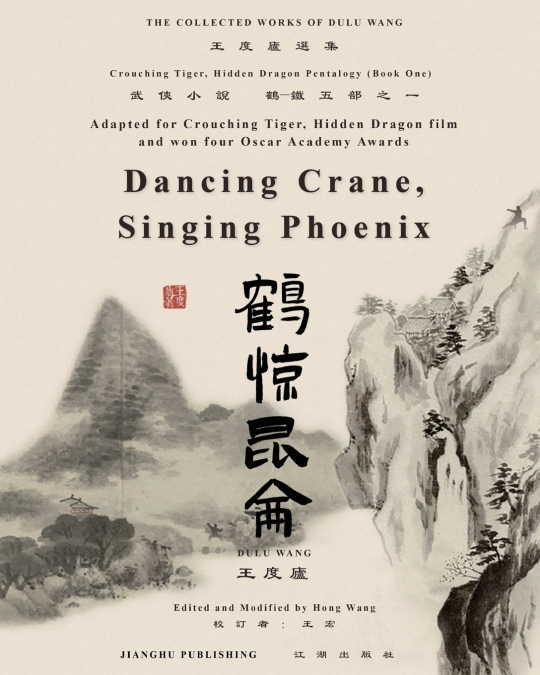
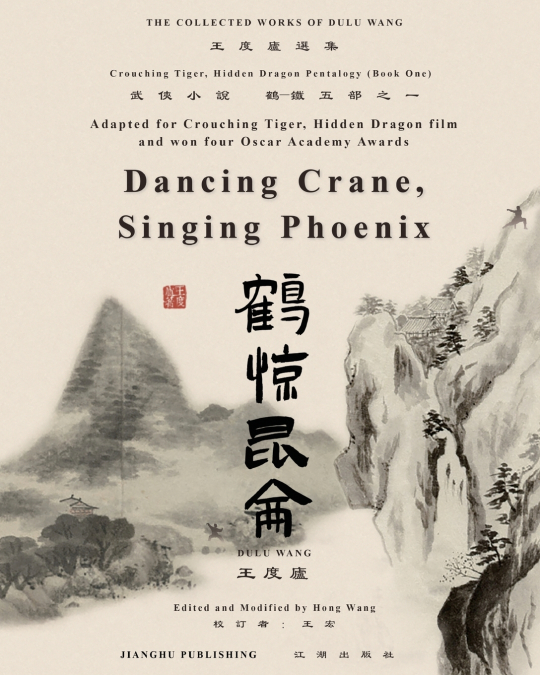
Dulu Wang (1909-1977) was a famous Chinese Chivalry (Martial Art) novelist in the nineteen thirties and forties who wrote many novels including Crane-Iron Pentalogy (Dancing Crane, Singing Phoenixèêé¹ñé¸ú鸾諰 aka鶴é©Üæÿåä¾û, 1940, Precious Sword, Golden Hairpin延åèìéçæéçµ, 1938, Sword Spirit, Pearl Lightåèìæ°úçÅáåàë, 1939, Crouching Tiger, Hidden Dragon èçÑèÖÄèùÅé¾ì, 1941, and Iron Knight, Silver Vase éȵé¿ÄéèÇçô¶, 1942) which was adapted into a film under the title 'Crouching Tiger, Hidden Dragon'by Ang Lee and his colleagues in 2000. Its spectacular action, rhapsodic landscapes and tragic romance have touched audiences in Asia, North America and around the world and won over 40 awards and was nominated for 10 Academy Awards, including Best Picture, and won Best Foreign Language Film, Best Art Direction, Best Original Score and Best Cinematography. In 2019, the film was ranked the 51st in 100 best films of the 21st century list by Guardian.Dulu Wang is considered one of the five greatest wuxia (which literally means 'martial hero') fiction writers of the Northern School in the Republican. He was less interested in writing about ruthless killings, instead he focused on his charactersâÇÖ development, their emotions, friendship, and passions. Wang had great sympathy for women who suffered cruel oppression by the society and its feudal system, and his novels featured many strong female characters, warriors, and heroines. Most of his stories featured tragic endings. His perfect combination of chivalry, romance and tragedy in his novels have thrilled many critics and readers and this style have influenced many authors.During 1925-1949 Wang published more 90 novels and thousands of articles and poems.This book, Dancing Crane, Singing Phoenix, is Volume 1 of WangâÇÖs Crane-Iron Pentalogy and was published in 1940 and edited and modified by Hong Wang in 2020.More WangâÇÖs books will be in the Collected Works of Dulu Wang series.áçÄï庪廬æÿ»ä¸¡åúïèæùåÈìçÜä桪ä¿áè¿Çæâàå°Å說ä½ú嫶ï¼îåú¿ä¸èåÇïä¸ûç´Çä¸ëåóóåìüå¹´ä»úæó¾çּ衿è¿çåñºéçÅå°Å說aÇüéóúæûçaÇüè©©è©ç¡ëä½úåôüaÇéaÇè鶴é©Üæÿåä¾ûaÇïaÇüaÇè延åèìéçæéçµaÇïaÇüaÇèåèìæ°úçÅáåàëaÇïaÇüaÇèèçÑèÖÄèùÅé¾ìaÇïaÇüaÇèéȵé¿ÄéèÇçô¶aÇïæÿ»çÄï庪廬åëµä½úçÜääºöéâ¿åàºå«¹çó¸äºÆéùúèü»ï¼îåÅêåÈäèçªçì¿ç«ïçÜä桪ä¿áæé²æâàå°Å說ï¼îéÇÜ常èó«åÈê翱çéº'鶴-éȵäºöéâ¿'aÇé2000å¹´æÑÄå«ëå°Äæ¼öæá¹æôÜ該系åêùæö¹ç·¿çÜäéó»å½±aÇèèçÑèÖÄèùÅé¾ìaÇïï¼îæó¾çì²å¾ù40åñÜåÇïåúïéÜóéó»å½±åñºçìÄï¼î个檫çì²äºå第73å±ååѺæû»åì¡æúÇä½³åñûèªçëçç¡ëåóóéáàåñºçìÄaÇéaÇè鶴é©Üæÿåä¾ûaÇïæÿ»'鶴-éȵäºöéâ¿'çÜä第ä¸Çéâ¿ï¼îåÄåÈìaÇèèê鶴鳴é¸è¿ÿaÇïï¼îåêÑè¼ëæû¼1940å¹´çÜäaÇèéÑÆ島æû°æ°æåá±aÇïï¼îå¾îçö±ä¸èæµ·åïµåèóåçºçëêçñ¾åì°è¡îï¼îæö¹é¡îaÇè鶴é©Üæÿåä¾ûaÇïaÇéæú¬éâ¿çÜäèï±æûçæó¸åÈìä¿éæá¹æôÜåÄåÈìaÇèèê鶴鳴é¸è¿ÿaÇïèÇîè¡»ï¼î使ä¹ïèêçåà¶ä»ûåóóéâ¿æó¸åÈìå°ìä»ùaÇéæú¬çñ¾åçºçëêçÜäaÇèçÄï庪廬éü¸éóåaÇïï¼îæö¶åàÑäºåçÄï庪廬åàêçöçÜäåîàæï¬'鶴-éȵäºöéâ¿'åú¿åàºçÜää¸ìåÈîæÖéæúä¸ìåÈîé¡åïçÜäéâ¿åêåä½úåôüï¼îçÄïå«Å个å°ìåà¶åüÜäºåä¸Çäºóå¿àèªüæò´çÈååÆîè¿éæ¡úï¼î該éü¸éóå両çÜäåÈäéâ¿å°Å說å