Esta web utiliza cookies propias y de terceros que nos permiten optimizar tu experiencia en el sitio web, evaluar su rendimiento, generar estadísticas de uso y mejorar y añadir nuevas funcionalidades. Mediante el análisis de tus hábitos de navegación podemos mostrar contenidos más relevantes y medir las interacciones con la web.
Puede obtener más información aquí.
Una cookie es un fichero que se descarga en tu ordenador al acceder a determinadas páginas web.Las cookies permiten a una página web, entre otras cosas, almacenar y recuperar información sobre los hábitos de navegación de un usuario o de su equipo, gestionar el acceso de usuarios a zonas restringidas de la web, etc.Tipo de cookies utiliza esta página web:
Este tipo de cookies permiten al usuario la navegación a través de una página web, plataforma o aplicación y la utilización de las diferentes opciones o servicios que en ella existan como, por ejemplo, controlar el tráfico y la comunicación de datos, identificar la sesión, acceder a partes de acceso restringido, seleccionar el idioma, o compartir contenidos a través de redes sociales.
| Nombre | Descripcion | Duración | Habilitado |
|---|---|---|---|
| ID de tu sesión. Te identifica en este navegador y nos permite gestionar tus cookies o almacenar tu cesta de la compra. | 8760 horas | ||
| Indica qué cookies has aceptado. | 8760 horas | ||
| Una cookie PHPSESSID es una cookie de sesión que se utiliza para identificar la sesión de un usuario en un sitio web. | 8760 horas |
Son aquéllas que posibilitan el seguimiento y análisis del comportamiento de los usuarios en nuestra página. La información recogida se utiliza para la medición de la actividad de los usuarios en la web y la elaboración de perfiles de navegación de los usuarios, con la finalidad de mejorar la web, así como los productos y servicios ofertados.
| Nombre | Descripcion | Duración | Habilitado |
|---|---|---|---|
| Es un servicio de analítica web que utiliza cookies de análisis. | 8760 horas |
Estas cookies pueden ser establecidas a través de nuestro sitio por nuestros socios publicitarios. Pueden ser utilizadas por esas empresas para crear un perfil de sus intereses y mostrarle anuncios relevantes en otros sitios. No almacenan directamente información personal, sino que se basan en la identificación única de su navegador y dispositivo de Internet. Si no permite utilizar estas cookies, verá menos publicidad dirigida.
| Nombre | Descripcion | Duración | Habilitado |
|---|
O que são os cookies?
Um cookie é um arquivo descarregado no seu computador para aceder certos sites. Os cookies permitem que um site, entre outras coisas, possa armazenar e recuperar informações sobre os hábitos de navegação de um/a usuário/a ou do seu computador, gerenciar o acesso do/a usuário/a às áreas restritas do site etc.
Que tipo de cookies utiliza este site?
Cookies de análise
São aqueles que permitem a monitorização e análise do comportamento do/a usuário/a no nosso site. A informação recolhida é usada para medir a atividade dos/as usuários/as no site e para criar perfis de navegação do/a usuário/a, a fim de melhorar o site e os produtos e serviços oferecidos.
Cookies técnicos
Permitem ao/à usuário/a navegar através dum site, plataforma ou aplicação e o uso de diferentes opções ou serviços que existem, como por exemplo o controlo do tráfego e comunicação de dados, identificar a sessão, aceder a áreas de acesso restrito, ou compartilhar conteúdos através de redes sociais.
Cookies de personalização
São aqueles que permitem adaptar a navegação no site com as suas preferências, como o idioma, navegador utilizado etc.
| Nome | Própria / Terceiros | Duração | Descrição | Proprietário |
| gat | Terceiros | 1 minuto | É usado para limitar a porcentagem de solicitações. | Google Analytics |
| _ga | Terceiros | 2 anos | É usado para distinguir os usuários. | Google Analytics |
| _gid | Terceiros | 24 horas | É usado para distinguir os usuários. | Google Analytics |
| PHPSESSID | Própria | Sesion | Cookie de sessão, desaparece quando a web é fechada. | Arnoia |
| COOKIE_CONSENT | Própria | 1 mês | Cookie de personalização. | Arnoia |
| SESS_ID | Própria | 10 dias | Cookie de sessão. | Arnoia |
Quem usa os cookies?
Os cookies utilizados neste site são usados pelo responsável legal do mesmo e pelos seguintes serviços ou fornecedores de serviços:
- Google Analytics: é um serviço de análise da web que usa cookies de análise. Voçê pode verificar a política de privacidade deste serviço no site https://www.google.com/intl/pt-PT/policies/
Como posso desativar ou excluir os cookies?
Voçê pode permitir, bloquear ou apagar os cookies instalados no seu computador configurando as opções do navegador instalado. As seguintes ligações fornecem informações adicionais sobre as opções de configuração dos cookies nos distintos navegadores:
– Internet Explorer: https://support.microsoft.com/pt-pt/help/278835/how-to-delete-cookie-files-in-internet-explorer
– Google Chrome: https://support.google.com/chrome/answer/95647?hl=pt
– Firefox: https://support.mozilla.org/t5/Cookies-and-cache/Ativar-e-desativar-cookies-que-os-websites-utilizam-para/ta-p/14289
– Safari: https://support.apple.com/kb/PH21411?locale=pt_PT

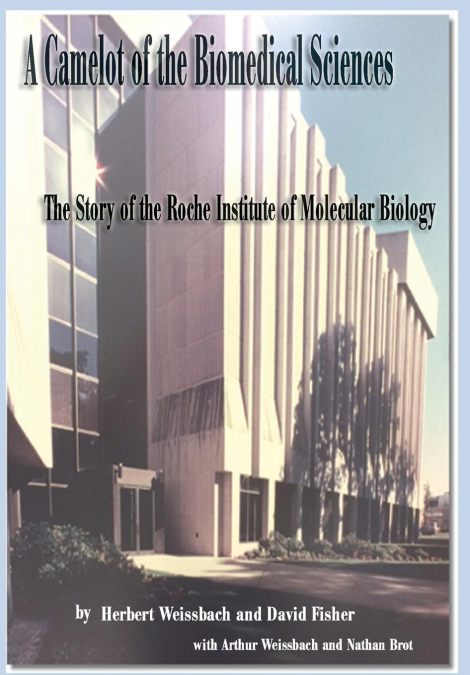
A Camelot of the Biomedical Sciencesá The Story of the Roche Institute of Molecular Biology á á á á á á á á á áá á á á áá á á The history of science began with wonder. Its foundation was endless curiosity about the world and people brave enough to ask, what if? How? And why? It began in rudimentary laboratories set up by wealthy men in basements and emptied rooms. The British Royal Academy gave it a formal experimental structure. And for almost two centuries it was the exclusive domain of those wealthy and educated people able to find the time and resources to conduct their experiments. To satisfy their own curiosity. á á áThe experimental laboratory is a relatively new invention, established mostly in universities before 1900. But laboratory science began growing with the realization that discoveries made in the lab could become valuable products. Edison proved those things discovered in laboratories had substantial commercial value. In the biomedical field two distinct industries came into creation: the prestigious laboratories and Universities where research was done to expand knowledge and commercial laboratories where it was done for profit. For decades, as the world&rsquo,s pharmaceutical industry developed and prospered in the United States, they remained separate and distinct. And then, in 1967, one of theworld&rsquo,s pharmaceutical corporations, Hoffmann- La Roche changed that world, it created and funded a laboratory for pure scientific research. There had never before been anything like it in the pharmaceutical industry. á á áAnd this is the extraordinary story of the Roche Institute of Molecular Biology, told in the words of the people who created it. á á áWith its substantial profits, especially from the psychopharm- acologic drugs librium and valium, staid Hoffmann-La Roche decided to make a ubstantial investment in the future: It would establish a place where many of the best scientists in the world could work on projects of their own creation -- with guaranteed funding and no requirements to produce results &ndash, much less a product. It was a scientific Camelot. Roche began by recruiting several of the most respected scientists at the prestigious National Institutes of Health. The first two men to risk their careers by joining the as-yet nonexistent Roche Institute, Sidney Udenfriend and Herbert Weissbach, with the support of senior management at Hoffmann-La Roche, would build a dream into a world renowned scientific research center. á á áBy the time the Roche Institute closed its doors, a victim of the biotech revolution that resulted in numerous entrepreneurial start-ups funded by Wall Street dollars, its scientists had made significant contributions to biomedical research while training many of the next generations of great research scientists. The staff eventually included one Nobel Prize recipient and seven elected members of the National Academy of Science. And equally important, the institute had laid the path that Roch